
Stamped Concrete Services in Sacramento, CA

Why Sacramento Property Owners Trust Our Crew
- We are based right here in Sacramento. That matters more than it sounds. Clay soil is one of the biggest challenges for any concrete surface in this region. It swells when it absorbs rain in winter and contracts when summer heat dries it out. That cycle puts pressure on concrete from below, and it causes cracks over time.
- We account for that before the first pour. We test the ground, we use the right concrete mixes, and we plan the slab so it can handle seasonal soil movement. Also, we follow Sacramento's local building codes and permit requirements on every project. So you are covered from the first day of work through the final inspection.
- Our team does not take shortcuts. We follow each step in order because the steps build on each other. Getting the base right means the surface lasts. Getting the pour right means the stamp looks sharp. Getting the sealer right means the color stays strong.
Our Stamped Concrete Services
Stamped Concrete Patio Installation and Repair
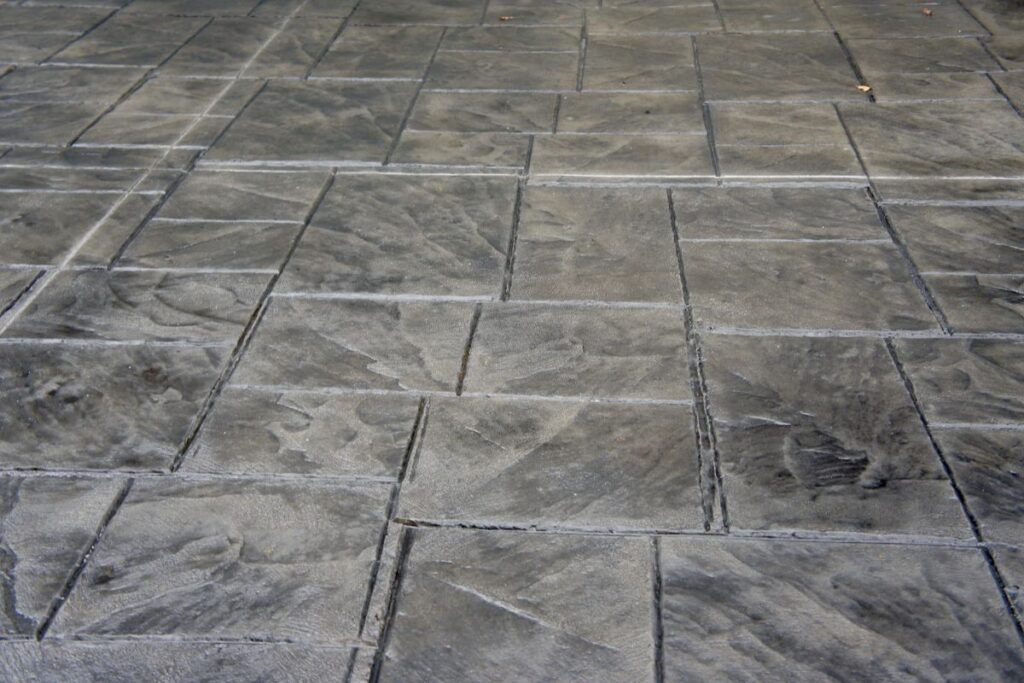
A stamped concrete patio gives your backyard a finished, polished look. It feels more like an outdoor room than a plain slab. You can choose from patterns like cobblestone, flagstone, and leaf imprint depending on the style you want. Color options include charcoal grey, earthy brown, terracotta, and multi-color blends.
We mix color into the concrete using a Brickform Series Faded Tipico integral pigment system. This puts the color all the way through the slab. So even after years of sun and use, the color does not peel away from the surface. Next, before we pour, we check the ground level using a rotating laser level with a digital grade rod. This confirms the slab will drain properly and sit flat. We also slope the patio away from your home's foundation, as required by Sacramento County's Grading and Drainage Manual, Section 5.3.This rule protects your foundation from water buildup after rain.
We also repair existing stamped patios. Cracks, chips, and fading are common over time, and most can be fixed without replacing the whole slab.
Stamped Concrete Pool Deck Repair and Installation
Pool decks need to be safe above all else. People walk on them barefoot and in wet conditions. A slippery surface near water is a real hazard. Stamped concrete solves that because it can be finished with textures that grip the foot even when wet. Patterns like seamless slate, flagstone, and wood grain all work well around pools. Color options include cool grey, sand, and travertine tones that stay comfortable in Sacramento's summer heat.
Before we seal any pool deck, we test the moisture inside the slab using an in-situ relative humidity probe kit certified to ASTM F2170 standards. Sealing over a slab with too much moisture causes the coating to bubble and lift. This test makes sure the timing is right. Next, we apply a Butterfield Color Antiquing Release over the stamped surface. This is a calcium carbonate powder that creates a natural two-tone finish, similar to aged stone. It adds depth to the look without extra steps later.
California Building Code Section 11B-302.1 sets the minimum wet slip resistance rating for pool deck surfaces at 0.42 on the DCOF scale.
Stamped Concrete Repair, Resealing, and Resurfacing
If your existing stamped concrete is cracked, faded, or worn, you may not need to replace it. In most cases, we can repair the damage, restore the color, and reseal the surface so it looks fresh again. This is a much more cost-effective path than tearing out and repaving.
Sacramento's clay soil and hot summers are hard on outdoor concrete. The soil expands in wet weather and contracts in dry heat. That repeated movement causes stress cracks over time. We inspect every crack with a concrete crack comparator gauge card, which reads widths from 0.002 to 0.10 inches. That measurement tells us which product to use. For cracks wider than one quarter inch, we fill them with Sikaflex-1a polyurethane joint sealant, which meets ASTM C920 Type S, Grade NS, Class 25 standards. This sealant is flexible. It moves with the slab instead of cracking apart when the ground shifts.
After crack repairs, we can resurface the whole slab with a decorative overlay and apply a fresh UV-stable sealer coat. If the resurfacing raises the finished surface height near a public sidewalk, Sacramento County Improvement Standards Chapter 6, Section 6.4 may apply. We check this on every project.
Stamped Concrete Driveway Installation
Your driveway is the first thing people notice when they pull up to your home. Stamped concrete makes that first look count. It handles daily car traffic well and holds its appearance far longer than plain concrete. Popular pattern choices for driveways include brick-stamped, cobblestone, and random stone. These patterns are especially good at hiding tire marks and everyday wear. Color options include grey, dark grey, charcoal, and brown.
Because a driveway carries vehicle weight every day, we always test the ground first. We use a nuclear density gauge tested to ASTM D6938 standards. This tells us how firm the soil is before we pour. If the base is too soft, the slab will crack under load. We fix that before anything else. We also pour a concrete mix that includes polypropylene macro-fiber at 3 pounds per cubic yard. This fiber reinforces the slab from the inside and reduces cracking caused by Sacramento's clay soil movement.
Also, if your driveway connects to a public curb or sidewalk, the City of Sacramento requires a permit under Municipal Code Title 17, Chapter 17.80. We handle all of that paperwork for you.
Stamped Concrete Walkways and Entryways
The path from the street to your front door or business entrance shapes how visitors feel about your property before they even walk in. Stamped concrete walkways hold up to foot traffic and look clean and intentional. Pattern options include herringbone, flagstone, brick, and leaf border designs. You can also add integral color bands along the edges for a finished edge detail. Color choices range from warm brown and tan to soft grey and natural stone tones.
We measure the cross-slope of every walkway using a digital angle gauge, the SmartLevel 48-inch model. The surface must not slope more than 2.08 percent across its width. Beyond that limit, the path becomes hard to use for people with mobility aids. Also, where a walkway meets a curb or accessible route, we install Armor Tile cast-in-place truncated dome inserts. These are yellow composite tiles, 12 by 24 inches each, that alert people to a change in grade ahead. This meets California Building Code Section 11B-247.1 and ADA Standards Section 406.1. We include this on every public-facing walkway we build.
Stamped Concrete Parking Lots
A business parking lot is part of your brand. A clean, well-paved lot tells customers and visitors that the business cares about its space. Stamped concrete works well for commercial lots because it handles heavy vehicle traffic when built correctly and holds its look far longer than plain asphalt. Pattern choices for parking lots include large-format stone, cobblestone, brick, and directional scoring. Colors like charcoal, grey, and dark brown perform well in high-traffic commercial settings because they do not show oil stains or dirt as easily as lighter shades. Every commercial lot starts with a soil strength test. We use a Clegg Impact Soil Tester that meets ASTM D5874 standards. We test at one point per every 500 square feet. If any area of the base is too soft, we correct it before the concrete goes down. We also apply a Scofield Lithochrome Color Hardener to the surface. This product uses a Type I Portland cement base and brings the finished concrete's compressive strength to at least 4,500 psi after 28 days. That means the surface holds up under the weight of daily vehicle traffic without chipping or cracking. City of Sacramento Zoning Code Section 17.64.060 requires all off-street commercial parking areas to have a sealed, non-dust-generating surface. Our finished lots meet this standard from day one.
Interior Stamped Concrete Floors
Indoor stamped concrete is growing in popularity across Sacramento, and for good reason. It is one of the lowest-maintenance floor options available. There are no grout lines to scrub, no boards to sand, and no tiles to replace. It also looks great. Pattern choices include wood plank stamps, seamless ashlar, geometric designs, and polished overlays. Color options range from warm walnut and ebony tones to cool greys and natural stone shades. You can create a modern look, a rustic feel, or anything in between.
Moisture is the main risk with any interior concrete overlay. If the slab is still releasing moisture vapor, the overlay will bubble and peel. We test every slab first using a calcium chloride moisture vapor emission rate test kit certified to ASTM F1869 standards. We run the test for a minimum of 72 hours to get an accurate reading. Once the slab is confirmed ready, we apply Ardex CD Fine Concrete Resurfacer as the base layer. This is a polymer and fiber-reinforced product applied at a minimum thickness of one eighth of an inch. It creates a smooth, level surface for the stamp to work on.
For commercial tenant spaces, California Title 24 Part 2, specifically California Building Code Section 1210.1, sets the flame spread rating requirements for interior floor finishes based on how the space is used. We confirm the occupancy type before selecting any product so your floor meets code from the start.
How We Work: Our Step-by-Step Process

Site Visit and Planning
We look at your space, test the soil, check drainage, and talk through your pattern and color choices. We also let you know upfront if a permit is needed.
Base Preparation
We remove any old surface material, compact the base, and install forms with proper control and expansion joints planned in advance.

Reinforcement and Pour
We set rebar or fiber mesh reinforcement, then pour the concrete mix. We level the slab and confirm the slope for proper drainage before the concrete sets.

Stamping
We apply color hardener and release agent, then press the stamp pattern into the surface. We also detail the edges and borders for a clean, finished look.

Curing and Sealing
We monitor the slab as it cures, then apply a UV-stable sealer with slip-resistant additives where needed. We walk through the finished surface with you before we call the job done.
Reseal Reminder Program
We enroll every client in our reseal reminder program. We reach out every 24 to 36 months so your surface stays protected without you having to keep track of it.